The Old Northeast Looks Like One Historic District. Its Protections Stop at the Block Line.
October 29, 2026
October 29, 2026
On July 14, the owner of 2400 Coffee Pot Boulevard NE went before St. Petersburg's Community Planning and Preservation Commission to ask permission to demolish the house. The city's records identify it as a noncontributing property, meaning it does not add to the district's historic character. The request still went to a public hearing, because the house sits in Granada Terrace, one of the Old Northeast's few local historic districts.
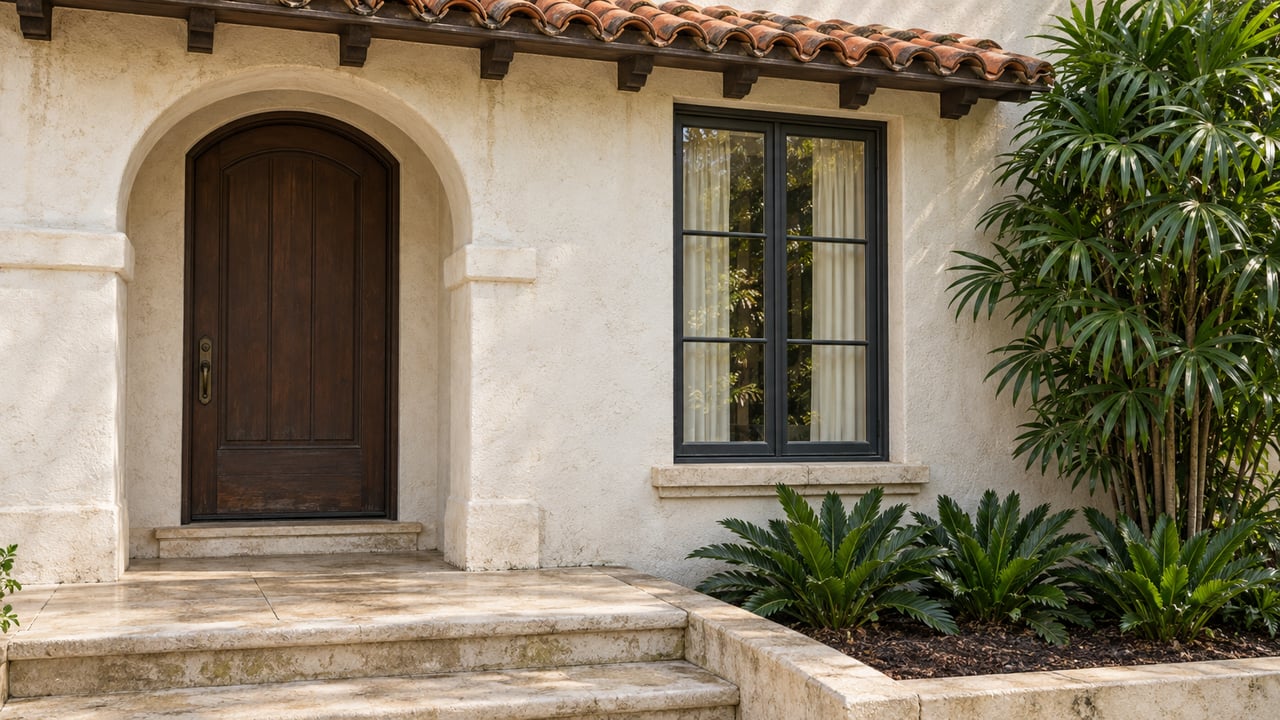
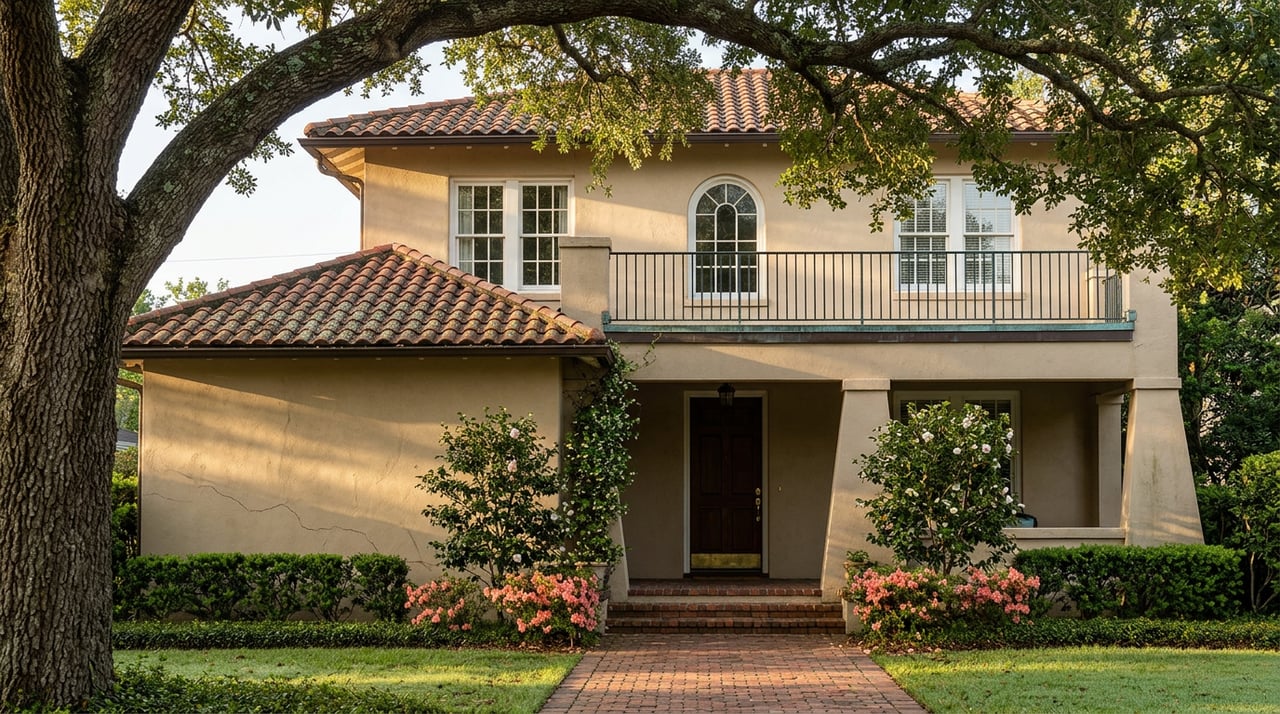
A few blocks away, outside a local district, an older home that is not a designated landmark can come down without any hearing at all. The brick streets and the 1920s Mediterranean Revival facades look the same on both sides of that line. The rules that decide what happens to them are not the same.
That gap matters to a buyer. When you pay a premium for an Old Northeast address, part of what you are paying for is the streetscape. Whether the city can hold your neighbors to that streetscape depends on which block you buy on.
Most of the Old Northeast falls within the National Register's North Shore Historic District, also called the Old Northeast Residential Neighborhood, which was listed in February 2003. The city gives its boundaries as 4th Street N, 5th Avenue N, Tampa Bay and 30th Avenue N.
That listing is often quoted as proof that the neighborhood is protected. The City of St. Petersburg's historic preservation page says otherwise. National Register listing "does not place restrictions on a private owner's future alterations unless Federal assistance is involved in the project."
The same page explains that local designation is different. A locally designated property gets "a degree of protection from unnecessary demolition or unsympathetic alterations by private owners," and changes are reviewed through Certificates of Appropriateness. The city code, Section 16.30.070, lists demolition and new construction among the work that needs a certificate for a local landmark or a property in a local district.
So the protection that actually binds an owner is the local kind, and the Old Northeast only has it in pockets.
The St. Petersburg Register of Historic Places does not list the Old Northeast as a whole. It lists these local districts inside it:
| Local district in the Old Northeast | Designated |
|---|---|
| Granada Terrace Historic District | April 1988 |
| 700 Block of 18th Avenue Northeast District | March 2017 |
| North Shore Section, 200 Block of 10th Avenue NE | November 2017 |
| Welch's Mediterranean Row | April 2018 |
The register also lists individual landmarks in the neighborhood, among them the Boyce Guest House at 205 Sixth Ave NE, the Pace Residence at 705 16th Ave NE, the Sargent House at 806 18th Ave NE and Westminster Presbyterian Church at 126 11th Ave NE.
Three of those four districts date from 2017 or 2018. The Old Northeast's protections were built one block at a time. They were never adopted for the neighborhood all at once.
The commission's 2026 hearings show what living inside one of these lines involves. Each item below is a request heard by the Community Planning and Preservation Commission:
The range is what a buyer should take from this list. Inside a local district, review reaches from a full demolition down to a backyard playset. That review is also what keeps the street around you looking the way it did when you bought, because your neighbors go through the same process.
For a house that is neither in a local district nor an individually designated landmark, the city code has one demolition safeguard, and it is narrow. When an application includes demolition of a property that is "potentially eligible for designation as an individual local landmark" and is flagged that way in city records, the city must hold the site plan and the demolition permit "for 30 days." A local preservation group, Preserve the 'Burg, has described that window as the time when a landmark application can be filed.
The hold applies only to properties on the city's List of Potentially Eligible Properties. It names specific addresses and is marked updated March 22, 2022. A house's age alone does not trigger historic review. Outside the local districts, the individual landmarks and that list, a 1925 bungalow and a 1995 infill house face the same demolition process.
The patchwork has a history. The Tampa Bay Times reported in May that preservationist Robin Reed saw charming homes in the Old Northeast being torn down. In 2006 she led a campaign to designate the whole neighborhood a Local Historic District. "That effort failed," the Times wrote. Reed later helped organize Mirror Lake homeowners as they formed their own local district, and City Council passed a resolution honoring her legacy this spring.
The mechanics explain why local districts tend to stay small. Under the current code, a district that the city does not initiate needs support from "owners of 50 percent plus one tax parcel" within its proposed boundary. The mailed ballot "shall remain open for the full 60 days." A majority is easier to reach on a single block of like-minded owners than across a neighborhood stretching from 5th Avenue N to 30th Avenue N.
That threshold was one of the items discussed on Sept. 24. City Council and the Community Planning and Preservation Commission met that day as a joint Committee of the Whole. The agenda included possible code changes linked to Council Member Brandi Gabbard. They would end third-party applications for individual designations, eliminate the List of Potentially Eligible Properties and revisit the vote needed for a new district.
In a Sept. 17 letter included in the meeting packet, the St. Petersburg Area Chamber of Commerce supported raising the district threshold "from 50% + 1 to 60% of affected tax parcels." The Chamber also backed eliminating or sunsetting the list, which it said "can create additional uncertainty, time, and cost during the development review process."
Preserve the 'Burg's account of the meeting described the threshold proposal as above 60 percent and said the package "fell flat." It reported that the group's letter called the package the most significant rollback since the preservation program began in 1985, and that city staff noted the changes could cost St. Petersburg its Certified Local Government status. The same account quotes Vice Chair Richie Floyd on the purpose of the list: "It's to make people stop and pause when working on a historic property [because] it could be an asset." The full meeting is available as a city video recording.
The package came to the Sept. 24 session as a discussion item. The packet listed the next Committee of the Whole for Oct. 22, with its agenda item marked "TBD." For the Old Northeast, two of the proposals matter most. The list is the only brake on demolition for houses outside the local districts that are not individual landmarks. The ballot threshold sets how hard it would be for another block to draw a new line.
Two listings on similar brick streets can carry different futures. Inside a local district, you accept review of your own exterior changes, and in return your neighbors' changes go through the same review. Outside one, you have more freedom, and so does everyone on your block. In listing photos, the two can look identical.
Before you make an offer, it helps to confirm:
This post is general information about public rules, not legal advice. A real estate attorney or the city's planning staff can confirm how these rules apply to a specific property.
Is the whole Old Northeast a historic district? It is a National Register district, the North Shore Historic District, listed in 2003. The city says that listing does not restrict private owners. Binding local review applies only in Granada Terrace, the 700 Block of 18th Avenue NE, the 200 Block of 10th Avenue NE, Welch's Mediterranean Row and individually designated landmarks.
Can a house outside those districts be demolished? Historic review is tied to local designation, not to a house's age. An individually designated landmark still needs a Certificate of Appropriateness for demolition. For other houses, the code's one safeguard is a 30-day hold on properties flagged as potentially eligible for individual landmark status.
Could more of the neighborhood become a local district? Under current code, owners of 50 percent plus one of the tax parcels in a proposed district would have to support it in a 60-day mailed ballot. Changing that threshold was one of the ideas discussed in September.
The Salamone Group can check designation status, nearby commission cases and the latest on the code discussion for any Old Northeast address you are considering. Let's Connect.

Working with The Salamone Group means more than just buying or selling a home—it means experiencing a higher level of service.