The Pass-a-Grille Exemption: How Historic District Status Reprices a Post-Storm Cottage at Closing
July 23, 2026
July 23, 2026
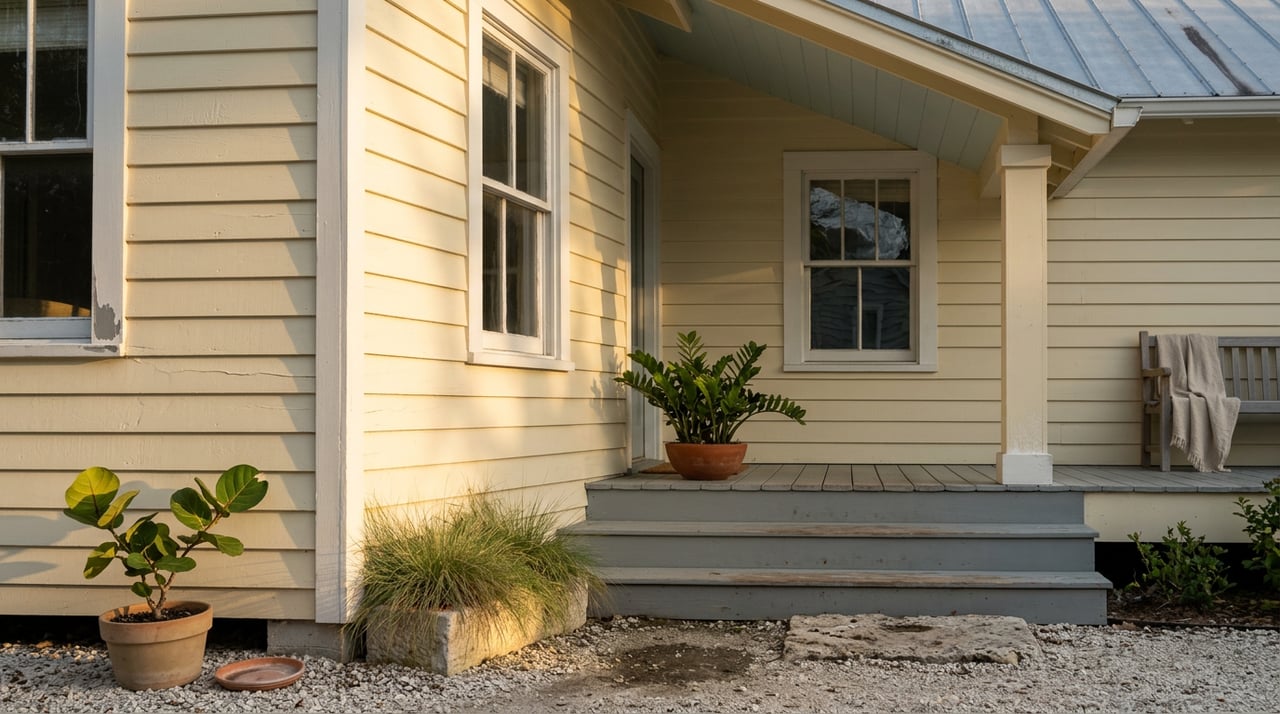
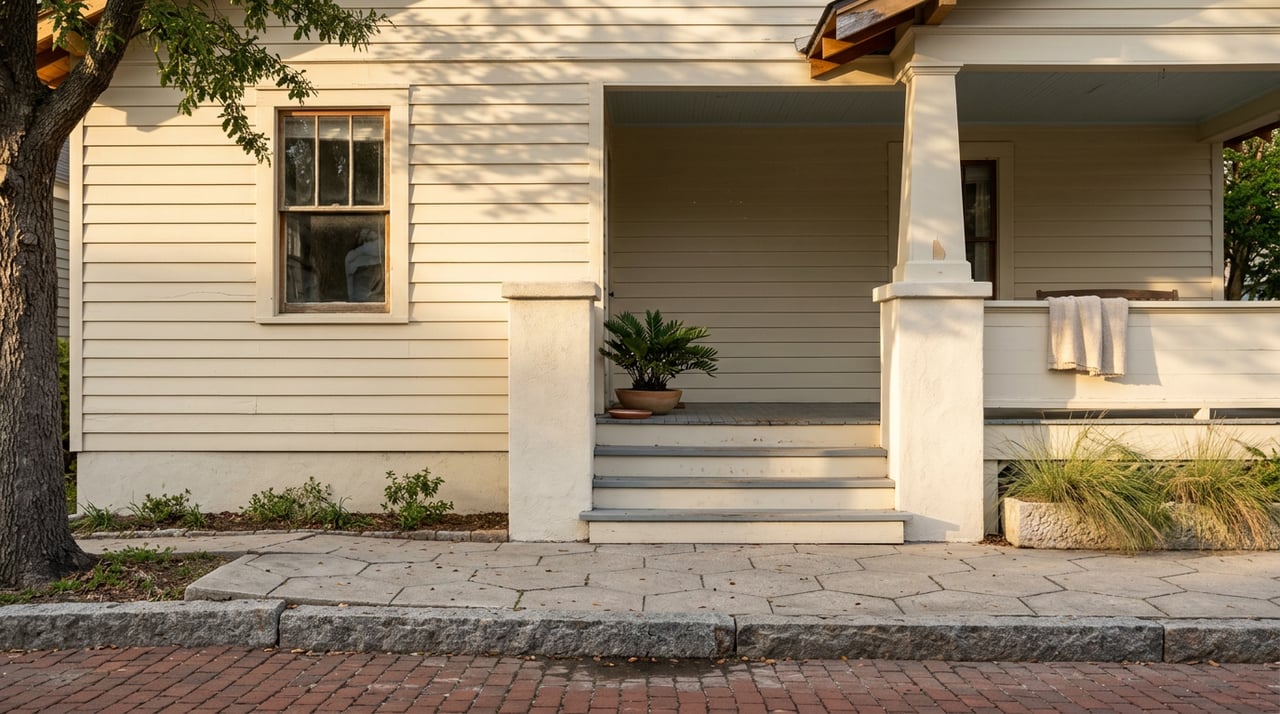
Two 1940s wood-frame cottages sit three blocks apart on the south end of Long Key. Same square footage, same elevation certificate, same insurance loss after Helene. One can be repaired to its pre-storm floor plan for whatever the owner is willing to spend. The other cannot exceed 49% of its structure value in combined repairs and improvements without triggering a full teardown-and-elevate.
The difference is not the water line. It is one line on a city planning file.
Nearly every parcel in St. Pete Beach sits inside a Special Flood Hazard Area, which means the FEMA 50% rule, formally called Substantial Improvement / Substantial Damage, applies by default. If cumulative repair and improvement costs meet or exceed 50% of the structure's market value, the building must be brought into full compliance with the current floodplain ordinance. In practical terms for a slab-on-grade Pass-a-Grille cottage, "compliance" often means demolition and reconstruction on pilings above a base flood elevation that runs 12 to 14 feet NAVD88 on exposed Gulf-side lots, plus one additional foot of Pinellas County freeboard.
Pass-a-Grille has a carve-out. The City of St. Pete Beach states the rule directly on its Hurricane Recovery Permitting page:
Structures on the local historic property registry, or are contributing to the Pass A Grille Historic District, may be exempt from this requirement.
That single sentence, buried in a municipal permitting page, is the largest unpriced variable in the Pass-a-Grille resale market right now. A buyer who confirms contributing status before writing an offer is buying a very different asset than a buyer who assumes the 50% ceiling applies. So is the seller who documents it in the listing packet.
The Pass-a-Grille Historic District was placed on the National Register of Historic Places on October 19, 1989, and expanded on September 15, 2003. Between the two listings, the district covers roughly 451 contributing buildings, which is unusually dense for a Gulf Coast beach town.
The original 1989 boundary and the 2003 expansion cover most, but not all, of the peninsula south of the causeway:
Being inside the boundary is not the same as being a contributing resource. A 1998 infill house on a district block is not contributing. A heavily altered 1935 cottage that has lost its original massing and materials may also have been reclassified as noncontributing. The determination is specific to the parcel, and it is the piece the buyer or seller has to confirm in writing with the city.
Even where the exemption applies, the surrounding math has not gone away. Two overlapping clocks continue to shape what a Pass-a-Grille owner can spend.
For a contributing property, an exemption request lifts the elevation trigger. It does not remove the requirement to permit the work, to document the cost basis, or to inspect through closeout. The Pinellas County after-the-fact permit amnesty, which waives penalty fees on unpermitted storm work through June 30, 2026 while still charging standard permit fees, is the window in which most of this documentation should be closed out. Details are on the Pinellas County Substantial Damage page.
Consider two Pass-a-Grille cottages carried on the Pinellas Property Appraiser's rolls at a structure value of $320,000, sitting on lots worth $1.4 million and $1.6 million respectively.
Without the exemption, both owners face a repair ceiling near $156,000 before the entire structure must be lifted or replaced to current V-zone or AE-zone standards. Structural elevation work in this market runs roughly $150 to $250 per square foot for the lift-and-foundation portion alone, before interior finishes come back. On an 1,800 square foot cottage, that lift is a $270,000 to $450,000 line item, on top of the finish work. Many buyers, correctly, will underwrite that scenario as a scrape.
With a confirmed contributing-structure exemption, the same 1,800 square foot cottage can be repaired to pre-storm condition without triggering elevation. The buyer's finished-house cost basis lands well below the sum of land plus new-construction cost per square foot on the same block. That is what "cottage stock" actually means as a pricing category in Pass-a-Grille, and it is the reason contributing homes have historically traded on their own comp set rather than being averaged against new elevated construction next door.
A companion Florida rule protects the tax side of the same transaction: the calamity provision allows a homesteaded owner to repair or rebuild up to 110% of the original structure's square footage without a reassessment penalty, provided the property remains the primary residence. Details are on the Pinellas County Property Appraiser's storm damage page.
The exemption is a conversation with the city, not an assumption. Before contract, or during a due-diligence period on a Pass-a-Grille cottage, the sequence that avoids surprises looks like this:
For a listing agent, the same sequence produces disclosure documents that shorten a buyer's underwriting and defend the price. For a buyer, it is the difference between an offer written on a cottage and an offer written on a lot.
Does contributing status transfer with the sale? Yes. The designation attaches to the structure, not the owner. A contributing home sold to a new buyer remains contributing unless the building is altered in a way that causes the city and state to reclassify it. That is a separate historic-preservation review, not something that happens at closing.
If the exemption applies, does ICC coverage still pay out? FEMA's Increased Cost of Compliance coverage, up to $30,000 under an NFIP policy, is triggered by a substantial damage determination that requires elevation, floodproofing, demolition, or relocation. If the exemption removes the elevation requirement, ICC does not fund a voluntary lift. It remains available for structures inside the district that are not contributing, or that lose contributing status through alteration. FEMA's IS-1104 material is the underlying reference.
What about a contributing cottage the owner wants to elevate voluntarily? Voluntary elevation is permitted, and in a V-zone parcel it can materially reduce flood insurance premiums. The tradeoff is preservation review: alterations to a contributing structure are evaluated against the Secretary of the Interior's Standards for Rehabilitation, and a lift that erases the building's historic massing can push the property to noncontributing, which then re-exposes it to the 50% rule on the next storm.
Where does this leave a noncontributing home inside the district boundary? Same rules as a home outside the district. The 50% rule applies, the five-year lookback runs from July 1, 2021, and the 9/23/2024 repair aggregation applies to post-Helene work.
Pass-a-Grille's cottage market is not a single market. It is at least two, split by a designation most listing sheets do not mention. If you are pricing a sale, writing an offer, or reworking a rebuild scope on the peninsula this summer, The Salamone Group can pull the parcel-level record with you and read the packet before it becomes a closing-table conversation. Let's connect.




Working with The Salamone Group means more than just buying or selling a home—it means experiencing a higher level of service.